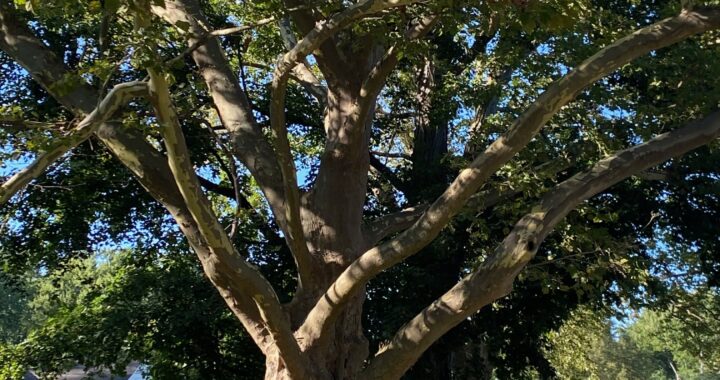
Bay Citizen’s Group Tackles Tree Canopy Loss

A Bay Village nonprofit organization is offering to split the cost of new shade trees with Bay residents to help restore the city’s vanishing tree canopy.

The citizen-led Bay Village Tree Conservancy will arrange for the delivery and planting of new canopy-scale trees at a greatly reduced cost to Bay homeowners through the Conservancy’s Win-Win program.

By participating in the Win-Win program, Bay residents can have an 8-10-foot tall oak or sycamore tree delivered and professionally planted by Conservancy partner Cahoon Nursery for $327, around half the retail price of the service.

Canopy trees are the tallest native trees with the greatest spread of branches and leaves that provide the most benefit to property owns and the community. Canopy species include oaks, maples, sycamores, tulip trees, and others.

A healthy tree canopy provides numerous benefits to the community, to homeowners, and to the local environment, including lower temperatures, reduced flooding, cleaner air, reduced noise, and improved habitat for birds and other wildlife.

In the past ten years, Bay Village has lost approximately ten percent of its tree canopy. While tree diseases like oak wilt and emerald ash borer infection and destructive weather have caused some loss, the greatest loss of tree cover in Bay Village is the result of property owners removing mature trees without replacement.

David Speaker, one of the founders of the Bay Village Tree Conservancy, said, “Growing up in Bay Village, we vividly remember its great forest of tall trees. Sadly, over the last 10 – 20 years our beloved tree canopy has rapidly diminished and faces a growing threat—the troubling removal of mature trees on private property, little of which is due to natural causes.”

“This tree loss has a profound adverse impact on our environment, reducing habitat for wildlife, increasing urban-heat-island effect, reducing air quality, and stealing neighborhood beauty. Our tree canopy is diminishing at an alarming rate. As legacy trees come down, so do property values and quality of life!” said Speaker.

While the City of Bay Village runs an aggressive tree-planting program, the City’s efforts are restricted to city-owned property, while most of the tree loss is occurring on private property.

The noticeable loss of canopy trees prompted Bay resident Tim Doyle to look for a solution. Eventually he joined others who shared his concern and established the Tree Conservancy,

What prompted me to get involved, said Doyle, was the awareness that trees provide benefits to humans, wildlife, and the environment. “To remove a tree is like watching mankind pick away at Mother Nature’s gift to us and not knowing the effects until it is gone.”

Bay resident Dee Williams obtained a tree through the Conservancy last year.

“We set a date, they came out before to select the best site, then came with the tree, shovels, extra dirt, and men to plant the tree. The arborist gave me instructions on how to care for the tree for the next few months,” said Wiliams.

“It was so easy and one year later the tree is doing well and has grown. I can’t wait to see the leaves turn in a few weeks! After all their donation and hard work, I decided to volunteer with BVTC.”

In addition to the Win-Win tree planting program, the Conservancy conducts community awareness and education programs and provides information to assist homeowners in preserving and caring for mature trees.

“BVTC—and its donors—are investing in Bay’s future as a community,” said David Speaker. “Every dollar donated goes directly to these tree planting and preservation efforts, helping ensure Bay Village remains a beautiful, green, and sustainable place to live for generations to come.”

For more information on supporting Bay Village’s tree canopy, tips for caring for trees, and instruction on applying for financial help in purchasing a tree, go to the Bay Village Tree Conservancy website at https://www.bvtrees.org/
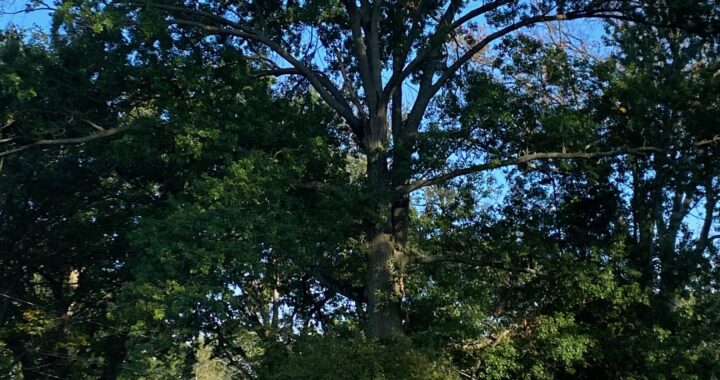
Healthy Trees, Healthy Bodies, Healthy Minds

A healthy tree canopy does more than reduce flooding and provide habitat for insects and birds, say researchers. Trees in wooded areas or your own yard can improve a person’s physical and mental health and may actually add years to a person’s life expectancy.

That’s the message that Dr. Robert Brand, Watershed Program Manager for the Cuyahoga County Board of Health, will share at the Bay Village Tree Conservancy’s next Community Forum at 6:30 pm on Wednesday, November 19, at the Bay Village Police Department Community Room at 28000 Wolf Road.

Brand has managed the county’s Watershed Program since 2017, and his public health career spans more than 25 years

His presentation will discuss the ecology and the health benefits of trees, including ways that trees can nurture a person’s body and mind.

Brand said that during his career he has seen an increase in the general awareness of the benefits of trees. But at the same time, he has observed increased clear-cutting of forested areas by developers, permitted by government officials seeking greater tax revenues.

“We are losing significant canopy by clear-cutting without sufficient replacement of indigenous canopy trees,” he said.

In Northeast Ohio we see a dichotomy, he said. On one hand, there is more awareness of the benefits of trees among the general public. On the other hand, property developers continue to ignore science and any citizens who object to clear-cutting and felling trees.

Through the loss of trees throughout the region, the health benefits of trees are being lost, said Brand.

One important benefit, he said, is that “a healthy tree canopy can mitigate the impact and help us adapt to climate change.” 

Brand is aware of the controversial nature of the term ‘climate change.’ But climate change is important, he said. “It is correct scientific information. It is important that people do not self-censor.”

Not using the correct term would make a person complicit with the denial of science, he said.

A healthy tree canopy provides numerous benefits in urban environments, said Brand. Trees capture carbon, reduce carbon dioxide emissions, absorb sunlight, lower temperatures, reduce heat island effects, reduce lung disease and allergies, improve the soil, reduce stormwater runoff, increase water clarity, absorb toxins, and reduce energy consumption by shading buildings.

In addition to these physical health benefits, trees also provide substantial mental health and spiritual benefits, said Brand. “We enjoy looking at trees,” he said.

But looking at trees is just the start. Researchers are finding increasing evidence that spending time outside practicing ‘nature therapy’ can improve a person’s physical and mental health.

One type of nature therapy is the Japanese practice of forest bathing, or shinrin-yoku.

Developed in Japan in the 1980’s, forest bathing is growing in popularity in the United States.

More than a simple walk in the woods, forest bathing involves a conscious effort to connect with the sights, sounds, smells, and texture of the woods.

Forest bathing requires active engagement with the environment, said Brand. Leave your phone at home – or at least in your pocket – and immerse yourself in the woods. Walk at a measured pace, breathe deeply and be mindful. Do this regularly – daily, if possible – for an hour each time.

In a 2022 paper published in Environmental Health and Preventive Medicine, Japanese researchers presented evidence that forest bathing can reduce blood pressure, heart rate, stress hormones, anxiety, depression, anger, fatigue, and confusion.

Other research indicates that forest bathing can improve life expectancy by several years, said Brand. Scientific literature also reveals that nature therapy can improve mental health and reduce climate anxiety and ecological grief, which are especially prevalent in people under 35.

But even if you don’t have convenient access to a forest, you can still benefit from trees, said Brand. “Even just having trees in your garden and sitting and looking at them is beneficial.”

“It is unfortunate that the Forum starts at 6:30,” said Brand. “It will be too dark for us to go out into the woods for an actual therapy session.”

The Bay Village Tree Conservancy is a citizen-led, non-profit 5013c organization devoted to protecting and restoring the residential trees of Bay Village. For more information on the Conservancy or the Community Forum, go to the Conservancy website at bvtrees.org