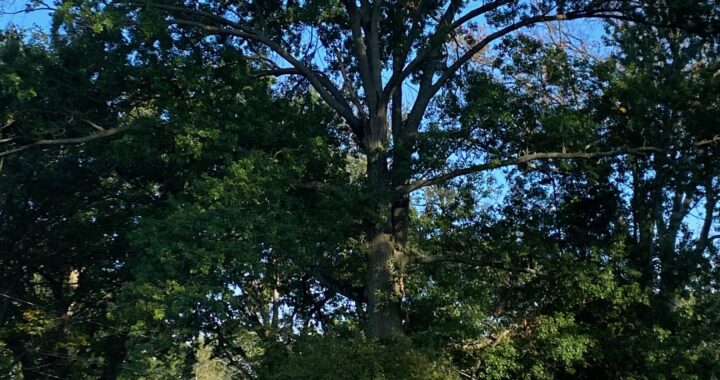
A healthy tree canopy does more than reduce flooding and provide habitat for insects and birds, say researchers. Trees in wooded areas or your own yard can improve a person’s physical and mental health and may actually add years to a person’s life expectancy.
That’s the message that Dr. Robert Brand, Watershed Program Manager for the Cuyahoga County Board of Health, will share at the Bay Village Tree Conservancy’s next Community Forum at 6:30 pm on Wednesday, November 19, at the Bay Village Police Department Community Room at 28000 Wolf Road.
Brand has managed the county’s Watershed Program since 2017, and his public health career spans more than 25 years
His presentation will discuss the ecology and the health benefits of trees, including ways that trees can nurture a person’s body and mind.
Brand said that during his career he has seen an increase in the general awareness of the benefits of trees. But at the same time, he has observed increased clear-cutting of forested areas by developers, permitted by government officials seeking greater tax revenues.
“We are losing significant canopy by clear-cutting without sufficient replacement of indigenous canopy trees,” he said.
In Northeast Ohio we see a dichotomy, he said. On one hand, there is more awareness of the benefits of trees among the general public. On the other hand, property developers continue to ignore science and any citizens who object to clear-cutting and felling trees.
Through the loss of trees throughout the region, the health benefits of trees are being lost, said Brand.
One important benefit, he said, is that “a healthy tree canopy can mitigate the impact and help us adapt to climate change.”
Brand is aware of the controversial nature of the term ‘climate change.’ But climate change is important, he said. “It is correct scientific information. It is important that people do not self-censor.”
Not using the correct term would make a person complicit with the denial of science, he said.
A healthy tree canopy provides numerous benefits in urban environments, said Brand. Trees capture carbon, reduce carbon dioxide emissions, absorb sunlight, lower temperatures, reduce heat island effects, reduce lung disease and allergies, improve the soil, reduce stormwater runoff, increase water clarity, absorb toxins, and reduce energy consumption by shading buildings.
In addition to these physical health benefits, trees also provide substantial mental health and spiritual benefits, said Brand. “We enjoy looking at trees,” he said.
But looking at trees is just the start. Researchers are finding increasing evidence that spending time outside practicing ‘nature therapy’ can improve a person’s physical and mental health.
One type of nature therapy is the Japanese practice of forest bathing, or shinrin-yoku.
Developed in Japan in the 1980’s, forest bathing is growing in popularity in the United States.
More than a simple walk in the woods, forest bathing involves a conscious effort to connect with the sights, sounds, smells, and texture of the woods.
Forest bathing requires active engagement with the environment, said Brand. Leave your phone at home – or at least in your pocket – and immerse yourself in the woods. Walk at a measured pace, breathe deeply and be mindful. Do this regularly – daily, if possible – for an hour each time.
In a 2022 paper published in Environmental Health and Preventive Medicine, Japanese researchers presented evidence that forest bathing can reduce blood pressure, heart rate, stress hormones, anxiety, depression, anger, fatigue, and confusion.
Other research indicates that forest bathing can improve life expectancy by several years, said Brand. Scientific literature also reveals that nature therapy can improve mental health and reduce climate anxiety and ecological grief, which are especially prevalent in people under 35.
But even if you don’t have convenient access to a forest, you can still benefit from trees, said Brand. “Even just having trees in your garden and sitting and looking at them is beneficial.”
“It is unfortunate that the Forum starts at 6:30,” said Brand. “It will be too dark for us to go out into the woods for an actual therapy session.”
The Bay Village Tree Conservancy is a citizen-led, non-profit 5013c organization devoted to protecting and restoring the residential trees of Bay Village. For more information on the Conservancy or the Community Forum, go to the Conservancy website at bvtrees.org